
sassykg • November 8, 2020

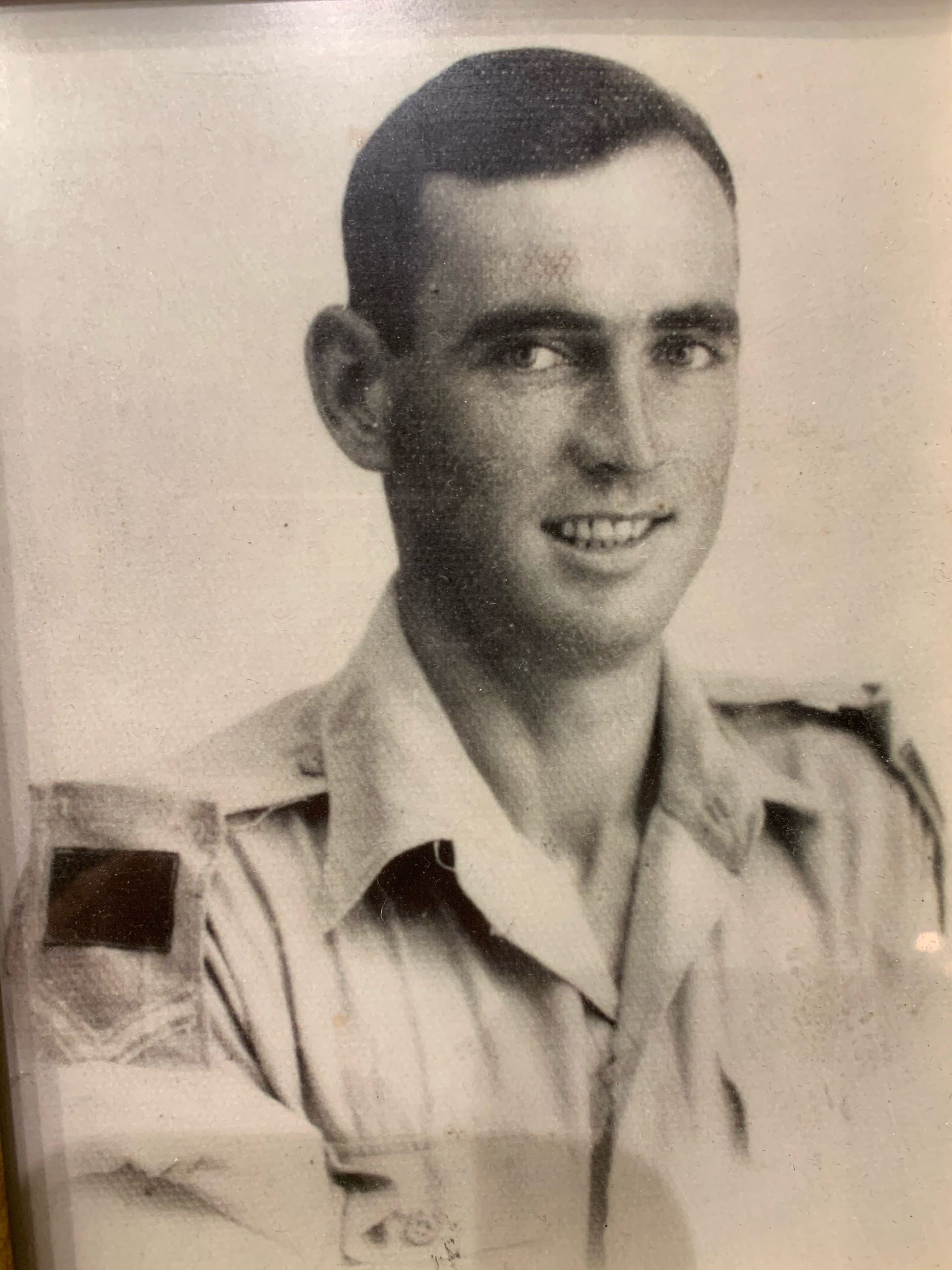
Life for my father, Alexander Joseph Gillis, was not a walk in the park but it was a wonderful gift. His frequently reiterated family stories, which he told to his 5 children on Sunday afternoons amid melodic riffs from a long playing record, helped create my understanding of dad’s world. The way he proudly told it, his family was a hard working group who were “directly” descended from Scotland’s Bonnie Prince Charlie. I never saw him wear a kilt but I do remember him (maybe too often) raising a glass and saying Slainte – Scottish for “cheers”!

My father or AJ as his closest friends called him, was a child born in World War I and a man developed during World War II. Born in February of 1918 in Nova Scotia, Canada he had three sisters and two brothers who shared a home on the family farm on the banks of the fish rich Margaree River in Cape Breton. The Gillis name is a common one in the area and particularly in SW Margaree. Many of the male Gillises shared first names. This made for a challenge when hearing local gossip. Just what Gillis was being talked about? The answer was a three part name. The first was your grandfather’s name followed by your father’s first name and ended with your own given name. Take my brother Hugh for example. His grandfather was Hugh, his dad was Sandy (Alexander) and his own first name was Hugh. When we visited my father’s birthplace my brother was introduced as Hughie Sandy Hughie leaving no doubt as to his lineage!

My dad attended high school and according to his military records he left school at 15 after completing grade 10. At the time the job opportunities for young men in Cape Breton were mainly restricted to coal mining, farming and laboring. My father was rather vague about his early work history but he alluded to working on the family farm, and driving trucks. Unquestionably in 1939 when dad was was 21 years old there was uncertainty in the world and instability in the Nova Scotia job market. In that year as war was declared AJ decided to ride the rails to look for work. He ended up in Canmore Alberta.

I am uncertain how long Dad spent in the Canmore region but he did find work with Imperial Oil for $30 a week! On December 13, 1939 he enlisted in the Canadian army and sailed to Europe on the SS Duchess of York in September 1940. My dad must have shared some of this story with me when I was a young girl because somehow I committed his regimental number to memory. M- eleven – fifty five is how he pronounced it. I had the occasion about five years ago to speak with a distinguished and high ranking veteran of that last world war and told him my father’s number. Without hesitation he said “That number tells me exactly where he signed up. Canmore” he declared.
AJ’s first deployment was to North Africa. That campaign lasted from June 10, 1940 to May 13, 1943. The offensive was a “struggle for control of the Suez Canal and access to oil from the Middle East and raw materials from Asia.” It seems dad was there for much of the operation and while engaging in combat he managed to contract malaria, a disease that was to recur intermittently during the remainder of his life.

Before the North African operation ended Dad was transferred to the Italian campaign. There he fought in one of the war’s toughest battles – The Battle of Ortona. Canadian troops were deployed to the little Italian town and engaged in hand to hand combat with German soldiers. The Canadian War Museum in Ottawa has an excellent and explicit exhibit that brings to life the reality of the rubble covered streets and hidden land mines that the brave Canadians encountered as they dodged machine gun fire and maneuvered between booby trapped houses. The sounds and smells the exhibit mimicked are a poignant lesson in the realties of military action.

On VE Day my dad was in a military hospital in England recovering from an injury he had sustained. He told the story of hearing the news of the victory in his hospital bed. The fellow soldier next to him had serious leg wounds and could not walk. AJ’s trauma resulted in an arm encased at right angles leaving only one workable limb. With his single good arm he managed to hoist his “roommate” into a wheel chair and pushed him out to the local raucous celebrations.

One final anecdote that my father told me and my brothers and sisters went like this. “Kids, I was promoted 13 times and demoted 14!” It made us laugh. I guess that was his way of protecting us from facing the harsh realities of war.

Father never boasted about his medals and awards. What our family did discover through Canadian military records after his death was that dad was “mentioned in dispatches”. This is a highly regarded recognition from the King for “gallantry and distinguished service.” Well done dad!

These were about the only stories my siblings and I ever managed to rip from AJ’s memory. When we asked more explicit questions like “Did you have to kill anyone, daddy?” we were met with elusive answers. My sense is that the deeply hurtful aftermath of combat and his fatherly protective sense kept him from voicing his personal emotional damage.

Now my dad was no saint. In fact, far from it. He had his demons that I suspect arose in part from those 7 years in military service. And to assuage those demons he would often self medicate with alcohol. So in that way, life was no walk in the park.

On the other hand, my father raised us with an incredible reverence for music, poetry and sense of duty and community. He considered himself lucky to have survived the war and to have seen his children grow and live safely and productively. So in that way his life was a wonderful gift.

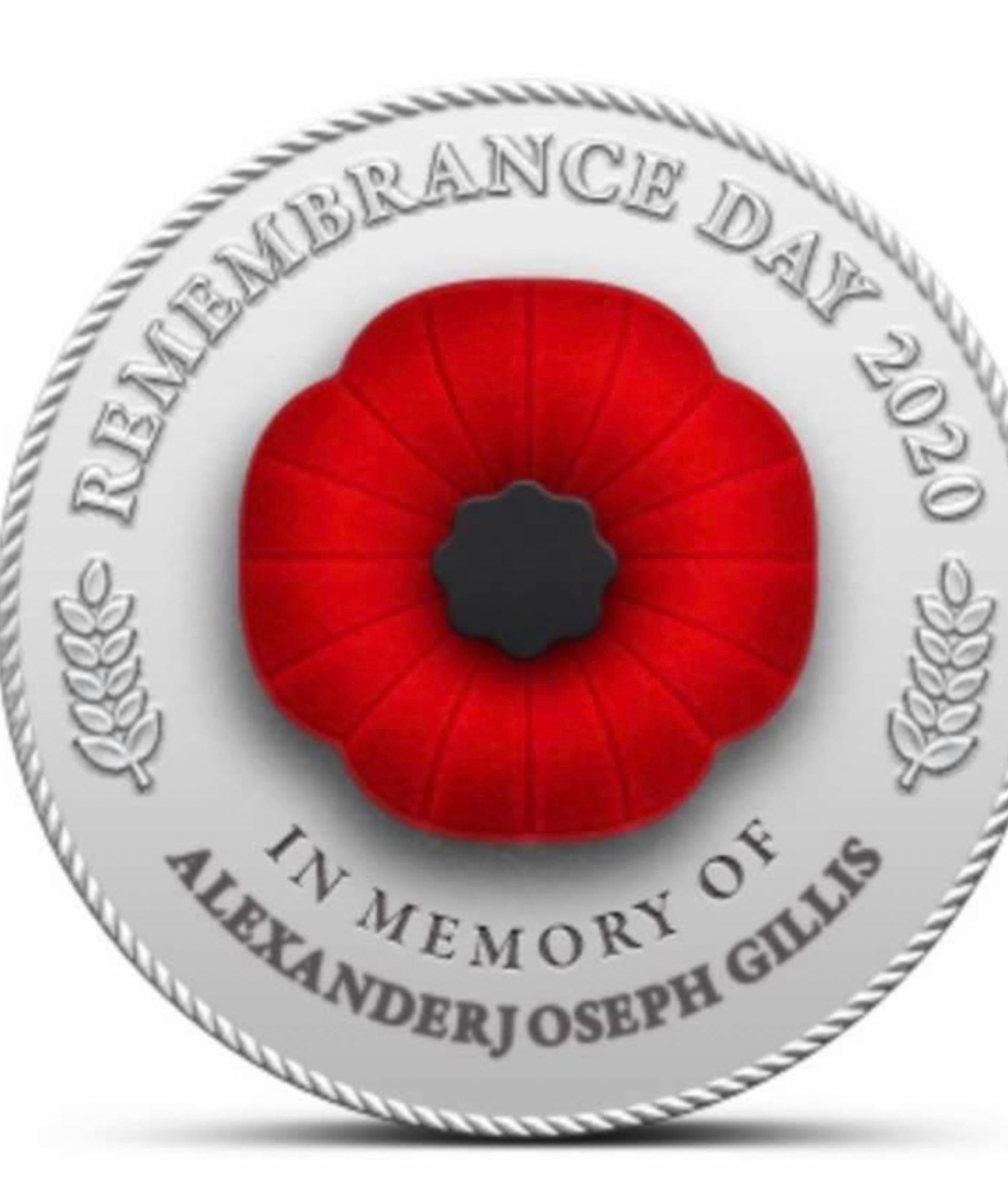
On this November 11, 2020, amid all the unbelievable challenges we have recently shared across the world – let us remember the brave men and women who served in our terrible wars. Let us salute the courageous people who have given up years of their lives for country and for humankind.

And to:

My dad

M Eleven 55

Slainte!!

is loading comments...

Sassy Blog

By K Grieve January 9, 2026
Inside One Inner City School and the People Who Refused to Look Away Every morning, there are children who walk to an inner city elementary school in Edmonton Alberta carrying backpacks far heavier than books. Some of the weight is invisible: fear, hunger, worry. Burdens no child should be forced to endure. The daily journey to school is not the “stuff” of fairytales. These young students must step carefully over sleeping bodies-the smell of alcohol and human waste filling the air. They pass by unhoused men and women bundled up in rotting blankets as they huddle on concrete doorways. People shooting up drugs is a regular scene. Some of these people the kids know-some are even family members. Shocking? unthinkable? Not for many of these children. It is simply the reality of their childhood. Inside the school walls, conversations are a chorus of languages and a mosaic of accents and cultures. Many have emigrated to Canada and English isn’t their first language. Some are Indigenous children. Some are housed in shelters or even live on their own. Most are trying to learn how to be heard, struggling with how to tell teachers they have a tummy ache or to confess they are afraid. Yet they are all determined to belong, to be noticed, to be loved and to have hope. Far too many arrive hungry, their empty stomachs growling. Food insecurity is a reality. No breakfast nor lunch packed in cute little personalized lunchboxes. Kim, a dedicated teacher at the school told me there is a breakfast program the school calls “morning meal” that is available to all kids. It may be simple but it matters greatly-yogurt, bananas and sandwiches are given to any child who needs it. There is no formal lunch program, so when extra food is available, it is saved for students without lunch. Slim pickings by most standards. During the school day, these children carry a heavy weight of uncertainty; they are not sure how to make sense of addition and subtraction, not sure what the teacher is saying, not sure where their next meal is coming from, not if the person greeting them at home is friend or foe. The uncertainty fuels their anxiety. The uncertainty robs them of joy. The uncertainty intensifies their fear. Beyond this there are stories even more disturbing. Abuse. Neglect. Physical violence. These realities have taught some children to be on their guard and to always be on the defensive. These children are not “difficult.” They are hurt. A number of the children arrive each day living in what we adults call “fight or flight”. Their antennae are on high alert. Teachers gently tell them how to breathe, how to name feelings and how to calm their bodies. As if these challenges weren’t already overwhelming, the school faces a constant battle with head lice. Despite these struggles, teachers and school administrators show up, day after day, ready to provide stability and predictability. They notice who hasn’t eaten or who is wearing the same clothes day after day. These teachers wear many hats. They are educators, counsellors and protectors. Most classrooms in this school follow a “trauma informed approach”: soft lighting, minimal clutter, consistent routines and predictable schedules. For children whose lives are filled with trepidation, school becomes their dependable constant. The goal isn’t just academics-it’s helping children feel safe and strong enough to begin to heal. Enter my friend Deb! Deb, who is affectionately called Miss Deb, volunteers at this challenging school. Two to three times a week she shows up at the school and does what committed school volunteers do. She gives her time, her heart and her presence to children who need all three. Kim says this about Deb. “I can recall a moment this fall where a student was upset. I was trying to distract him and get him thinking positively so he would calm down. I asked him to tell me things that made him happy. He listed three things. One of them was Miss Deb.” That says it all. But for Deb the stories she hears about the kids have keep her up at night, anxious and worrying. Could there be some tangible way to help? Deb knew the principal and staff had been working for a long time to secure the funding needed to build a new playground for the school. They managed to raise some of the money but were short by $35,000 to make the playground a reality. And for that reason, Deb sent out a heartfelt plea to community members to help fund the long needed play ground. This could not be some ordinary playground. Because of the surrounding environment, it needed to be “ special”: fully enclosed and carefully designed to protect the kids from hazards, like discarded needles from drug use. This playground had to be designed to prevent it from being used as sleeping spaces for the homeless or individuals affected by addiction. What should be a simple place to play must also be a protected space where children can feel safe and simply just be children. And then something special happened. Deb’s plea did not fall on deaf ears. Within minutes of Deb’s email being sent, the local community stepped up. The response was overwhelming. One donor, a well known Edmonton philanthropist, immediately responded and pledged the full $35,000! Others stepped up as well. And most recently a charitable foundation matched the $35,000 which will fund other critical school priorities. It was an astonishing level of generosity and a reminder of how much people care when they are asked. As a former teacher and one who has spent years in public service in Edmonton, I have witnessed first hand how these serious struggles intersect - each intensifying emotional and physical strain. Poverty, homelessness, addiction and family violence are profoundly intensified by our already strained and outdated support systems. Certainly, this local community response was remarkable. It’s proof of the power of a combination of compassion and generosity. This story exemplifies that help can be available when need is shared; it underscores the positive and critical impact of volunteerism. “Sometimes miracles are just good people with kind hearts” But it also leaves us with a bigger and more disturbing question: What can we do as a society to address the deep challenges that at-risk children face? How can we break the cycle that has trapped them? How can we help them envision a brighter future? A playground is a powerful beginning, but it cannot carry the weight.
By K Grieve November 25, 2025
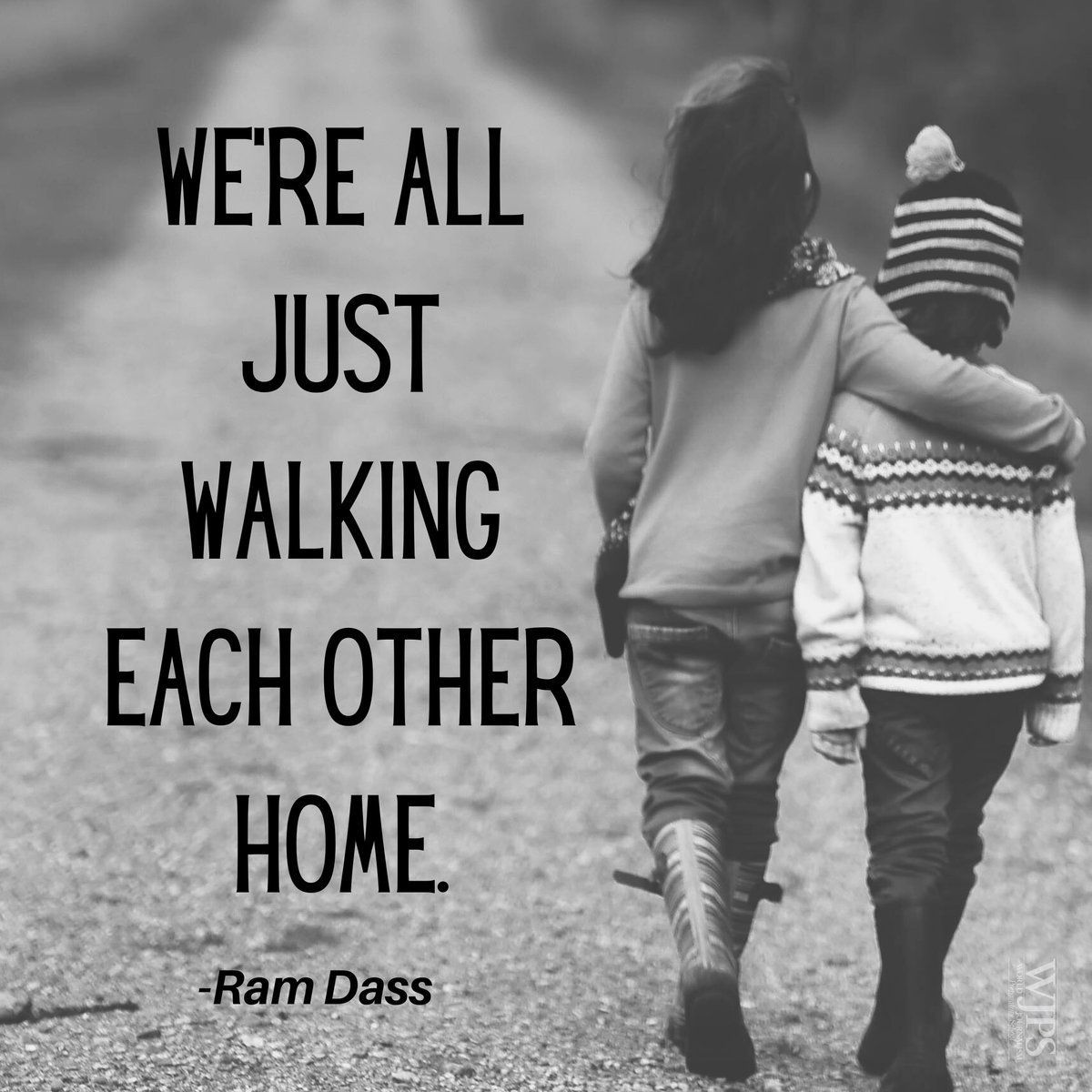
A Note Before You Read Before you read this post, I want to offer a small warning. This piece isn’t my usual stroll down memory lane or a lighthearted SassyThoughts remembrance. It enters an area that is heavier, darker, and far more unsettling than what I typically share. It’s a story that has frightened me, and left its mark in ways I didn’t understand at the time. It’s a story about murder! If you prefer the gentler reflections, feel free to skip this one. But if you choose to read on, just know you are following me into a memory that is chilling. ……………………………………………………………………...................................................................................................... Death has always scared me. That realization did not come gently. It arrived harshly! It scared me even before I fully understood it. The fear of death was planted in me in grade two at St. Patrick’s Parochial School in Victoria, B.C. Sister Mary Doleena, my favourite teacher, told us that Jesus died on the cross to save our immortal souls. I remember the way sister said “died”. It seemed so final and I wanted it to go away. The idea of a man suffering, bleeding, nailed to a wooden cross filled me with dread. Even at seven, something in me resonated: death is real, and none of us can escape it. Years later, when I was nine, I met a girl riding her bike with a printed scarf on her bald head. I told my mother I met a new friend but that she always wore a scarf tied tightly around her head. None of her hair was showing and I wondered why? My mother explained that she knew that my friend had cancer, a cruel disease that could take her life. Another snapshot on death. But nothing-absolutely nothing-prepared me for what happened in September 1975. The memory still comes hauntingly back, stirring feelings I thought I had long forgotten. I was newly separated, living in a small slanted-floor house in Winnipeg with my one-year-old son, Noah, and my friend Jill. I was working in an Affirmative Action program called New Careers, which helped mostly indigenous adults (many from small communities and / or reserves in Manitoba) to find employment after receiving two years of job training. Jill and her colleague Marilyn taught at an inner-city “alternative” school called Robertson House; it was stressful, challenging work. The school’s aim was to help kids whose challenges prevented them from success in a typical public school. Marilyn lived a few blocks away from us in an older two-story home with a veranda and creaking floors. She lived alone, but had a boyfriend named Mike who was a fellow teacher at the school where she taught. She was separated from her husband, who, as I recall, lived in Winnipeg. Every school-day morning, Jill was picked up by Marilyn and the two of them made their way to Robertson House. They were not only coworkers, but also good friends. One evening, the teaching staff from Robertson House met in my living room for their first meeting of the year. It seemed like it was a positive and productive meeting, and I came home just as the group was leaving. Marilyn was smiling as she slipped on her jacket. I had no idea it would be the last time I’d ever see her alive. The next morning, as usual, Jill was waiting to catch a ride with Marilyn outside our front door. I had taken Noah to daycare and came back home to get ready for work. I was very surprised when Jill burst through the front door, shaking. “Marilyn has not picked me up; I went by her house and the back door is ajar.” she said as she trembled. “Something there isn’t right,” she said. Her face was tense and her eyes were wide. There was something in her voice, cold and fearful, that made my stomach heave. I said “We’ll go together and see what is happening.” I grabbed my green winter coat and the two of us flew out of the house. We ran the few blocks to Marilyn’s home, the early fall air stinging our cheeks. The neighborhood was so quiet. There was no wind, but we felt a chill in the air. When we reached Marilyn’s yard, her back door menacingly hung open. Inside, the kitchen felt wrong. The kind of wrong that felt eerie. Her cat was licking at food on the counter, but the air was too still, too heavy. We called her name. ‘Marilyn, Marilyn!” No response. We climbed the narrow stairs slowly. Me first, Jill behind, each step creaking loudly, like a warning. At the top of the landing, I looked into the master bedroom. And the world stood still. Marilyn was face down on the bed. Blood everywhere: splattered, pooled, smeared in a way that instantly told me something horrific had happened here. A metallic smell filled my nostrils. My body froze and then I shook with a terror I had never felt before. The grisly image before me was soon to be etched into my memory forever. For a moment neither Jill nor I could breathe. Then instinct took over. There was a rotary phone mounted on the stair landing. I heard myself shout, “Jill! Call 911!” Jill’s hands were trembling. She fumbled as she attempted to dial. She was sobbing, unable to get a number to turn fully around the wheel. “Give it to me!” I yelled, grabbing the phone from her. When the operator answered, the words tore out of me: “We’re at our friend’s house. She’s face down on the bed. There’s blood everywhere!” My voice sounded like it belonged to someone else. I can still feel that moment: the cold air burning my lungs as panic washed over me. The knowledge that death wasn’t an idea anymore was real. It had a smell. It had a presence. Totally panicked, Jill and I stumbled down the stairs, nearly tripping over each other, and we burst out the front door. I remember propping open the screen door, as if to allow air to cleanse the atmosphere. We ran all the way to the boulevard and stood there shaking, looking up and down the street as if the police could somehow save us just by arriving fast enough. A young policeman arrived alone, and asked me directly “Is she dead?” “I don’t know, I didn’t check,” I said nervously. We waited on the lawn as the young officer entered the house and ascended the stairs. A few minutes later, he came back down, shaking. He took our names and our address, and told us to go home-despite the fact that this was now a crime scene, and we were the only witnesses. Jill and I clung to each other as we made our way back to our house. Could the murderer be someone we knew? What if we were next? We climbed the steps up our porch and, terrified, we crept into our house. I rushed to the kitchen and grabbed the biggest knife I could find. Together, we moved from room to room, checking every corner, hoping that we found no one waiting for us. Luckily, no one was there, and we were free from danger. The young officer from the crime scene gave our address to two detectives that then showed up at our house. We were put into their vehicle and taken down to Winnipeg’s downtown station, and put into a little windowless room for questioning. As we waited to be interviewed, next door we could hear the sobbing of Marilyn’s boyfriend Mike as he was questioned about Marilyn’s death. The details sickened him, and we could hear the sound of him vomiting through the walls. In the days that followed, the truth of what happened to Marilyn emerged, and it was more terrifying than anything I could have imagined. Marilyn and her ex-husband had taken in a troubled teenaged boy called Allen, as a kind of foster child. They wanted to help him find stability, structure, and hope-things his troubled life had never offered him. While living with Marilyn and her husband, Allen worked a paper route, but instead of delivering to his customers, he began stealing their subscription money. Marilyn discovered what he was doing and felt it her duty to “rat him out.” She did what any responsible adult would have done: she reported him. The consequence for young Allen was swift. He was sent to a rough youth detention centre in Saskatchewan. The environment there was harsh and punishing. At fourteen, anger overtook him and he directed that anger at Marilyn. A few years later, Allen escaped the detention centre, and he came straight back to Winnipeg. Not to find help. Not to start over. Maybe not even to seek vengeance. Maybe just to steal whatever he could? Regardless of the motivation, the end result was brutal. In the early hours of that September morning, in the quiet of her home, he beat Marilyn to death with a hammer that belonged to her. Did she stumble upon him as he was stealing from her? We will never know. Regardless, the brutality of it is unconscionable. The combination of his tough youth and the kindness of the victim is almost too much to comprehend. Even now, the senselessness of it all sits heavy. Marilyn had opened her door to him, and he repaid her with a violent death. Knowing this didn’t lessen the horror of what Jill and I found that morning. If anything, it deepened it. The unpredictability of a human who is consumed by rage is overwhelming. Marilyn’s decision to report Allen to the authorities led to her tragic death. Frightening memories are difficult to suppress. While this is an unusual experience for most people, I believe it’s worth sharing. Writing this particular blog entry has brought back a traumatic experience-one that is both a unique and terrifying-yet this is still an experience and a memory that I have lived through. Is it cathartic? I hope so. As we age, death creeps closer. It is not an illusion but is something inescapable. People say the runway gets shorter, and it does. But Ram Dass said it best: “We are all just walking each other home!” Some of us stumble. Some vanish suddenly. But the rest of us keep on walking, because in the end, that’s all any of us can do.